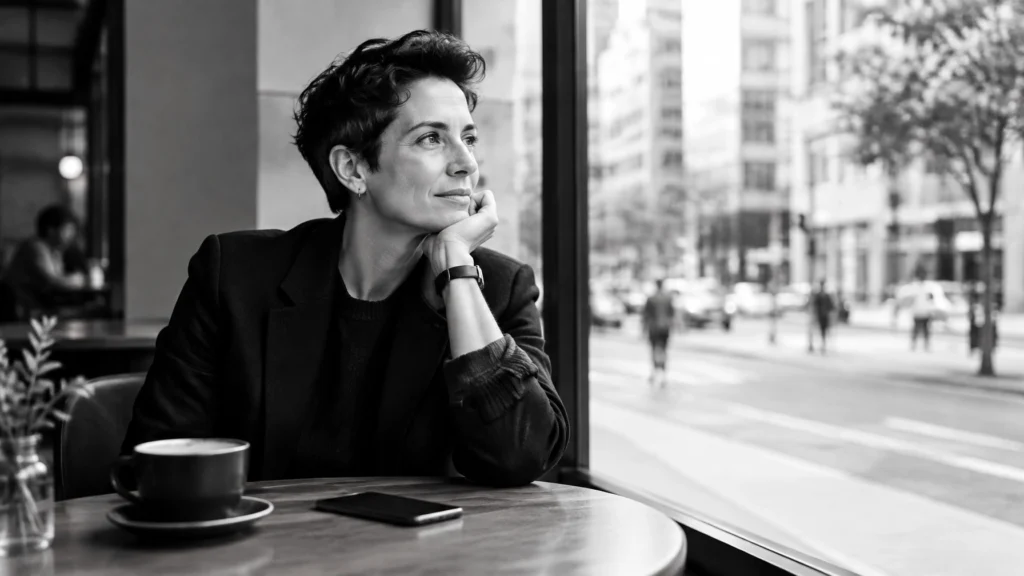
You’ve got a full calendar, a half-finished coffee and three dating-app conversations that have somehow become a fourth job. One person hasn’t replied since Tuesday. Another is enthusiastic in the chat but vague about meeting. And a third looks promising, except you’re beginning to wonder whether the immaculate photos and perfectly polished opening line are quite as human as they seem.
If you’ve caught yourself thinking, “Maybe I should just get off these apps,” you’re not alone.
In October 2026, headlines about tech professionals turning to high-end human matchmakers, singles choosing in-person dating events and growing interest in slower connections have brought a familiar frustration into sharper focus: the problem may not be that you can’t meet people online. It may be that endless digital contact isn’t giving you the trust, clarity or connection you’re looking for.
So, are dating apps dead? Not quite. But for some busy Sydney singles, the way they want to date is changing.
The matchmaker boom is a signal, not proof that everyone’s leaving apps
Recent Bloomberg coverage described tech professionals connected to the AI boom turning to high-end human matchmakers. Yahoo Finance also reported on the very high fees some wealthy clients may pay for premium matchmaking services.
It’s striking. It’s also easy to read too much into it.
Stories about affluent technology professionals choosing an expensive, highly curated service don’t prove that dating apps are over, or that everyone is rushing to hire a matchmaker. They describe a particular group of people with unusual levels of disposable income and, often, very little spare time. What those stories do suggest is that some people are willing to pay for help reducing the effort and uncertainty of dating.
That’s not the same as buying a guaranteed partner. Nor is every form of human support the same. A premium matchmaker may offer introductions; a dating coach works with you on how you approach dating, communicate and make choices. Those can be very different services with different aims.
The more useful takeaway is this: when the default way of dating stops feeling useful, people look for a better fit, not necessarily a replacement technology.
For a busy professional, that might mean fewer app conversations, more deliberate first dates, a social event where you can meet several people face to face, or coaching that helps you get clearer about what you want. You don’t have to choose a single route forever.
Apps still work for some people. App fatigue is real for others.
The honest answer to “Are dating apps dead?” is no. They remain one way to discover potential partners, and research continues to show that app connections can become real relationships.
The issue is that a tool can work for some people and still feel draining for you.
Maybe you’ve spent a Sunday night rewriting your profile, then found yourself staring at the same five photos all week. Maybe you’ve exchanged dozens of messages with someone and still don’t know whether they’re genuinely interested in meeting. Or maybe the apps give you a steady stream of options without helping you work out which ones fit your values and the life you actually lead.
There’s a particular kind of frustration in having more choice but feeling no closer to a good connection. It can leave you tired, suspicious and a little self-critical: “Am I being too picky? Am I not trying hard enough? Is everyone else having an easier time?”
Often, the more helpful question is not whether you’re doing dating “correctly”. It’s whether your current approach is helping you build the kind of connection you want.
A BBC report on singles choosing dating events over apps captured some of that shift. People described being fed up with endless swiping and “chat graveyards”, and drawn to the possibility of talking face to face. The story does not mean apps have disappeared; it shows that some daters want more opportunities to meet in person.
That matters in Sydney, where work, travel and long commutes can make even a promising social plan feel like one more calendar negotiation. If online dating is taking up time but not getting you closer to a real conversation, it makes sense to reconsider how much energy you give it.

AI can make dating smoother, and make authenticity feel harder
AI is already part of how people date. It can help someone brainstorm a profile, plan a first date or find a way to start a conversation when they’re nervous. Used as a sounding board, that kind of help may feel practical.
But there’s a difference between using a tool to prepare and asking it to perform your dating life for you.
The 2026 Spark Study, based on a survey of single adults in the UK, found that people use AI for a range of dating-related tasks, from planning dates to practising what to say. It also reported wariness about AI altering photos or writing messages: many respondents said they would find those uses unacceptable, and a substantial group said discovering AI-written messages could end their interest.
Those figures describe UK singles, not Sydney daters, so they shouldn’t be treated as local statistics. But the tension they highlight is easy to recognise: people may welcome useful assistance while still wanting to know who they’re actually talking to.
If a profile seems flawless, a message lands like it came from a romance copywriter and the photos look untouched by either daylight or reality, it can be hard to relax into curiosity. You might start wondering whether the person is showing you themselves, or a carefully assembled pitch.
And that uncertainty can run both ways. You may feel pressure to present a version of yourself that seems more polished, more impressive or more effortlessly charming than you feel on an average Wednesday. But if your profile promises a person you can’t comfortably be on a date, the mismatch may make the first meeting harder, not easier.
Before you roll your eyes at “just be yourself”, because yes, that phrase can sound painfully obvious, hear me out. Authenticity doesn’t mean sharing everything immediately or refusing to make an effort. It means letting your profile and conversations sound enough like you that the person you meet isn’t a stranger to the person they thought they were choosing.
Why the slow burn is getting attention
There’s another 2026 conversation worth noticing: the growing interest in connection that takes time to develop.
Feeld’s State of Dating 2026 report explored what singles said they felt was missing from modern dating. In its survey, 58% pointed to a lack of authenticity and clear intentions, while 86% agreed that attraction can strengthen as two people build a shared story through conversations, experiences and plans. Those are the report’s findings, not a promise that everyone’s attraction will grow if they simply wait long enough.
Still, the idea offers a useful counterpoint to the pressure to know everything instantly.
Swipe culture encourages quick decisions from limited information. A photo, a prompt, a short exchange: yes or no, compatible or not, “spark” or nothing. But some qualities you may care about most (kindness, emotional openness, humour, reliability, curiosity) are easier to notice through interaction than through a profile.
That doesn’t mean ignoring a lack of attraction or overriding your boundaries. It means you don’t have to treat a first impression as a complete biography. Sometimes curiosity is enough to earn a second conversation. Sometimes you meet and know it isn’t right. Both outcomes are useful information.
Consider Priya, 36, a hypothetical Sydney-based architect. She’s used to making quick decisions at work, so she tends to assess dates in the same way: was there immediate chemistry, did the conversation flow perfectly, did she feel certain by the end of the first coffee? When she gives someone a little more room, without talking herself out of her instincts, she notices that comfort and attraction don’t always arrive on the same timetable.
Growth isn’t linear. And a “slow burn” is not a rule you owe anyone. It’s simply permission to let a connection reveal itself at a human pace, when it feels safe and mutually welcome to do so.
In-person dating isn’t automatically easier, but it can give you different information
Meeting someone face to face can help you notice things that are difficult to assess through messages: how you feel in their company, whether conversation feels reciprocal, whether they listen and how they respond when the moment isn’t perfectly scripted.
It can also be awkward. Really awkward. You might arrive at a singles event, spend the first ten minutes wondering what to do with your hands, and briefly consider pretending you’ve received an urgent email. That nervousness doesn’t mean you’re doing it wrong; meeting new people takes practice for many of us.
The BBC’s October coverage describes events that use group settings, activities and conversation prompts to make introductions feel less like a high-stakes one-on-one interview. The point isn’t that every event will produce a promising date. It’s that an in-person format can offer a different starting point: a real conversation, with less time spent trying to decode a typing bubble.
If you’re curious, you could try:
- A friend-of-a-friend gathering, where you have a little context and a familiar face.
- A class, group walk or hobby event, where you share an activity instead of relying entirely on small talk.
- A singles event, if the format, location and crowd feel right for you.
- A short, low-pressure coffee or walk after a promising app conversation, rather than weeks of messaging.
Keep your safety and comfort in the picture. Choose a public place, arrange your own transport and let someone you trust know your plans if that feels right. You’re allowed to change your mind or leave if a situation doesn’t feel comfortable.
And if an event isn’t for you? No problem. The goal isn’t to force yourself into a trendy format. It’s to create opportunities that feel realistic and aligned with how you want to meet people.

What this shift means for busy Sydney professionals
The matchmaker headlines, event coverage and slow-burn conversation point to a wider change in what people expect from dating: less noise, more intention and a clearer path from first contact to actually getting to know someone.
For you, that doesn’t have to mean deleting every app tonight. It could mean changing how you use them.
1. Decide what you want the apps to do
Are they a way to meet people you wouldn’t otherwise encounter? A place to start a conversation that you’ll move offline if it feels promising? Or have they become a habit you reach for when you’re bored, lonely or avoiding another task?
There’s no judgement in noticing. The answer can help you choose a more useful boundary, such as a set time to check apps or a limit on how many conversations you’re keeping active.
2. Make your intention easier to understand
If you’re seeking a committed relationship, you can say so clearly without turning your profile into a five-year strategic plan. A direct, warm statement gives someone relevant information and helps you filter for people looking for a similar kind of connection.
Clear intention also means asking the other person what they’re looking for, then listening to what they say. Not what you hope they meant. Not what their last three emojis might imply.
3. Move from chatting to meeting when you’re ready
There’s no universal number of messages that makes a first date sensible. If you’ve had a good exchange and feel comfortable, you might suggest a short, public meeting rather than continuing an intense text relationship with someone you haven’t met.
A simple invitation can be enough: “I’ve enjoyed chatting. Would you be up for a coffee this week?” Their response gives you information. A clear yes, a thoughtful alternative or continued vagueness each tells you something different.
4. Let your profile sound like a person
Choose recent photos that look like you. Write about things you genuinely enjoy, rather than guessing what will perform best in the algorithm. You don’t need a bio that reads like a brand campaign. A specific detail (a favourite weekend walk, an overly strong opinion about dumplings, the hobby you keep returning to) can offer someone a natural way to start.
The aim isn’t to appeal to everyone. It’s to make it easier for the right kind of person to recognise something real.
5. Notice your patterns without turning them into a verdict
Do you lose interest when someone is consistent? Find yourself drawn to people who are hard to pin down? Feel hyper-alert to small changes in tone after a date? Those patterns can be worth reflecting on. They don’t mean you’re broken, and they’re not a diagnosis.
Ideas such as attachment styles can provide a vocabulary for thinking about how you experience closeness, uncertainty and communication. In a coaching context, they can be prompts for reflection and practical dating goals, not labels that explain everything about you or the people you date.

Human-led support can help you date more intentionally
Sometimes the most useful alternative to another app isn’t a matchmaker. It’s a chance to pause, look at your approach and work out what you want to do differently.
Dating by Richie’s personalised Dating Coaching programme includes four 60-minute sessions and check-in calls. The focus is on your individual dating goals and practical areas such as how you choose potential partners, communicate your intentions and approach dating with more self-awareness. Coaching is not therapy, and it does not diagnose or treat mental health conditions.
For people wanting a more intensive experience, the Dating Makeover is a three-day programme with in-person coaching by two industry experts. It includes a style overhaul, grooming, confidence building, dating strategies and a before-and-after photoshoot. If you’re interested, check the current programme details and availability with the team.
These services aren’t a substitute for taking your time, meeting people in your own way or deciding that a particular approach isn’t right for you. They’re one option if you’d value structured support and a more intentional plan.
You can learn more about Dating Coaching and the Dating Makeover, or get started with Dating by Richie.
So, are dating apps dead?
No. But the idea that apps should be your only route to a relationship is looking less convincing for people who are tired of swiping without feeling closer to anyone.
The 2026 matchmaker headlines are a reminder that some time-poor professionals are seeking human curation. The rise in attention around dating events points to the appeal of face-to-face conversation. And the slow-burn discussion is a useful nudge to remember that connection can take longer than a few photos and a clever prompt.
You get to decide what belongs in your dating life. Keep using apps if they’re helping. Step back if they’re draining you. Try meeting people through friends or events if that feels more natural. Get support if you want someone to help you think through your patterns and next steps.
You don’t need to find the perfect system. You need an approach that leaves enough room for you, and the person you meet, to show up as real people.
The future of dating isn’t necessarily app-free. It may simply be more human, more deliberate and better matched to the life you actually live.
Trio disclaimer
This article provides general information only and is not legal, medical, financial or psychological advice. Dating coaching is a coaching service; a coach does not diagnose or treat mental health conditions, and coaching is not a substitute for therapy, medical care or other qualified professional support. You remain responsible for your own decisions and actions. Coaching does not guarantee a relationship, a particular outcome or a specific match; results vary. For further information, please read our Terms.